Your order confirmation email has been sent. Payment received. Everything looks good from your end. But 48 hours later, your support inbox starts filling up with the same message, again and again: “Where is my order?” This is WISMO – the single most expensive question in eCommerce. According to multiple industry sources, WISMO queries account for 30–50% of all eCommerce customer support tickets – and during peak season like Diwali or festive sales, they can climb past 50% of total support volume. For brands handling 3,000 WISMO tickets per month, that easily translates to ₹7,50,000–₹15,00,000 in annual support costs for a single type of inquiry. The most frustrating part: WISMO is almost entirely preventable. It is not caused by bad products or poor customer service. It is caused by a single gap – the absence of proactive, real-time delivery communication after an order ships. This guide covers everything: what WISMO means, why it happens in India specifically, what it actually costs, and 8 proven strategies to reduce it starting today.
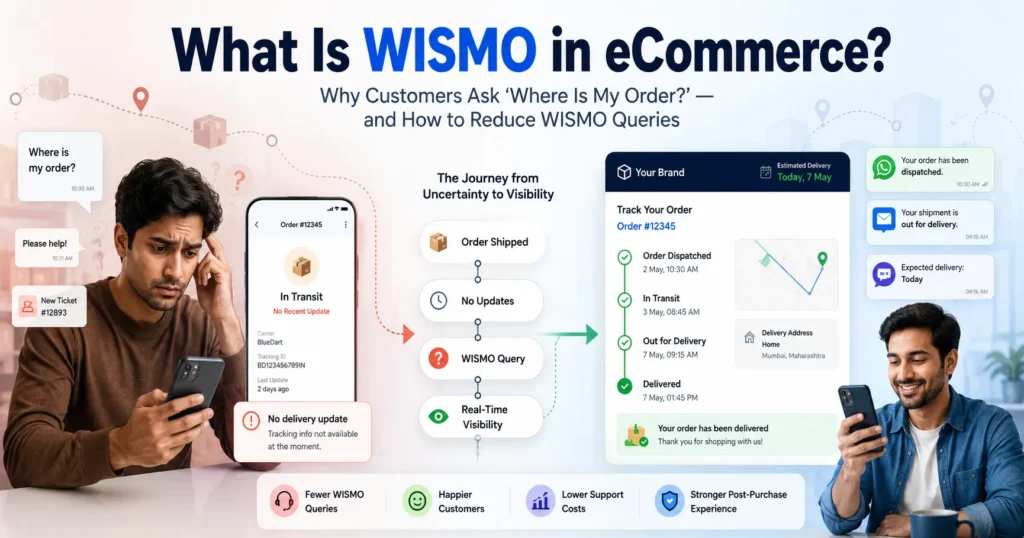
WISMO = ‘Where Is My Order?’ – a post-purchase customer inquiry generated by the absence of proactive delivery communication. It is not a delivery problem. It is a visibility problem.
- What Is WISMO? (Definition and Full Form)
- Why WISMO Is a Visibility Problem, Not a Logistics Problem
- WISMO in Indian eCommerce – Why It Is More Acute Here
- The Real Cost of WISMO – What Each Query Actually Costs
- When Do WISMO Queries Spike? (Peak Moments)
- WISMO vs Post-Purchase Experience – The Bigger Picture
- 8 Proven Strategies to Reduce WISMO for Indian eCommerce Brands
- How ShipSagar Eliminates WISMO at Scale
- Frequently Asked Questions
What Is WISMO? (Definition and Full Form)
WISMO stands for ‘Where Is My Order?’ – the most common customer support inquiry in eCommerce, generated when a buyer does not know the current status of their order after it has been shipped. WISMO is not a single type of inquiry – it is a category of post-purchase queries that arrives through multiple channels:
- WhatsApp message to the seller: ‘My order was supposed to arrive 2 days ago. Where is it?’
- Customer support call: ‘I placed an order 5 days back, haven’t received any update’
- Email to support: ‘Order #12345 – can you tell me the current status?’
- Instagram DM: ‘Hey, still waiting for my order, it’s been a week’
- Live chat message: ‘I have a tracking number but the courier website shows nothing’
- Marketplace dispute: ‘Package not received – request for refund’
All of these are WISMO – a customer reaching out because they do not know where their order is. The channel varies. The question is always the same.
| Why ‘WISMO’ as a Term Matters: Naming a problem precisely helps businesses measure and solve it. When eCommerce teams start tracking WISMO as a specific metric – not lumped into general support tickets – they begin to see patterns: which delivery milestones generate the most queries, which courier partners generate the most WISMO, and which notification gaps are causing the most anxious customers to reach out. |
Why WISMO Is a Visibility Problem, Not a Logistics Problem
This is the most important reframe for eCommerce sellers: most WISMO queries are not caused by actual delivery failures. They are caused by the absence of proactive communication during the delivery window. Think about the buyer’s perspective after placing an order:
- Day 0: Order placed → Confirmation email received ✅
- Day 1: Silence. No dispatch notification.
- Day 2: Silence. Buyer checks the courier website – no scan update yet.
- Day 3: ‘In Transit’ – but no estimated delivery date. Buyer anxious.
- Day 4: Still ‘In Transit’. Buyer contacts support: ‘WHERE IS MY ORDER?’
In this scenario, the parcel was on time the entire time. The buyer’s anxiety – and the resulting WISMO ticket – was caused entirely by the silence between dispatch and delivery. The delivery itself was not a problem. The communication was.
| What Causes WISMO | What Prevents WISMO |
| Silence after ‘Order Dispatched’ | Automatic ‘Dispatched’ WhatsApp notification with tracking link |
| No update for 2–3 days in transit | Proactive delay notification: ‘Your order is on its way – 1 day delay due to courier hub’ |
| Redirect to courier portal (Delhivery/Blue Dart) instead of brand page | Branded tracking page on seller’s domain – customer tracks on your website |
| No OFD (Out for Delivery) notification | WhatsApp OFD notification: ‘Your order arrives today between 2pm–6pm’ |
| Generic tracking number with no context | Human-friendly status: ‘Your parcel is in the Mumbai sorting center – expected delivery: tomorrow’ |
WISMO in Indian eCommerce – Why It Is More Acute Here
WISMO is a global eCommerce problem – but several factors specific to Indian logistics make it significantly more acute in India than in the US or European markets:
1 Multiple Courier Partners With Different Tracking Systems
Most Indian eCommerce brands ship with 3–5 courier partners simultaneously – Delhivery for metros, Blue Dart for premium, DTDC for budget, India Post for rural, FedEx for international. Each courier has its own portal, its own tracking page, its own status language. When a customer receives a tracking number, they often do not even know which courier site to check – and when they do find the right site, the status language (‘Bagged for Dispatch’, ‘Manifested’, ‘OFD’) is confusing without explanation.
2 WhatsApp as the Primary Customer Communication Channel
India has 535.8 million WhatsApp users – the world’s largest single-country WhatsApp base (DataReportal, Digital 2025). Indian customers expect WhatsApp communication for order updates – not just email (which many Tier 2/3 city buyers rarely check) or SMS (which gets buried in promotional messages). When brands send only an email dispatch notification, Indian customers feel uninformed – and WhatsApp the seller directly.
3 Longer Last-Mile Delivery Windows in Tier 2/3 India
For metro cities, delivery typically takes 1–3 days – short enough that buyers rarely reach peak anxiety before delivery. For Tier 2 and Tier 3 cities – which represent a growing share of Indian eCommerce volume – delivery takes 4–8 days, and tracking updates are less frequent. A buyer in Surat who ordered on Monday and expects delivery by Friday – with no update from Tuesday to Thursday – will almost certainly contact support.
4 COD Orders Create Extra Uncertainty
For COD (Cash on Delivery) orders – which make up 60–70% of orders in Tier 2/3 India – buyers have not paid yet. The unresolved financial transaction adds urgency to their order anxiety. ‘Where is my order AND am I going to have to pay for it today?’ is a much more anxious question than a prepaid buyer’s simple curiosity.
5 Tracking Not Updating – India Post Lag
India Post (Speed Post) is the only courier covering every pincode in India – critical for rural sellers. But India Post’s tracking updates can lag 24–72 hours – especially in remote areas where postmen may not scan at every stop. This ‘tracking stuck’ scenario is a primary driver of WISMO for sellers relying on India Post for Tier 4 and rural deliveries.
| India-Specific WISMO Reality: ShipSagar customers who implemented automated WhatsApp* (add-on extra cost) notifications across all courier partners reported 60–69% reduction in WISMO support queries within the first month. The reduction was most dramatic for Tier 2/3 city orders – precisely the orders where tracking gaps were largest and buyer anxiety was highest. |
The Real Cost of WISMO – What Each Query Actually Costs Your Business
Most eCommerce founders underestimate WISMO costs because each interaction seems small – a quick WhatsApp reply, a 2-minute phone call, a short email. The real cost reveals itself only when you look at the aggregate.
1 Direct Cost Per WISMO Interaction
Industry data (LateShipment, ServeRetail, ClickPost) consistently places the cost of a single customer support interaction at $5–$25 depending on channel and complexity. In Indian eCommerce at Indian support team costs, this translates to approximately:
| WISMO Channel | Avg. Resolution Time | Cost (India Support) | Volume at Scale |
| WhatsApp message | 3–5 minutes | ₹25–50 | Highest volume |
| Phone call | 5–8 minutes | ₹60–100 | High volume |
| Email response | 8–12 minutes | ₹80–120 | Medium volume |
| Live chat | 6–10 minutes | ₹50–80 | Growing |
| Marketplace dispute | 20–40 minutes | ₹200–400 | Lower but costly |
2 The Scale Problem – Annual WISMO Cost Calculator
| Real Cost Example – D2C Brand Shipping 2,000 Orders/Month: Orders/month: 2,000 WISMO rate: 30% (industry average) = 600 WISMO contacts/month Channel breakdown (estimated): • 400 WhatsApp messages × ₹35 avg: ₹14,000 • 100 phone calls × ₹80 avg: ₹8,000 • 80 emails × ₹100 avg: ₹8,000 • 20 marketplace disputes × ₹300 avg: ₹6,000 Total monthly WISMO cost: ₹36,000 Annual WISMO cost: ₹4,32,000 After implementing ShipSagar’s automated notifications (60% WISMO reduction): • Monthly WISMO: 240 contacts × ₹50 avg = ₹12,000 • Monthly savings: ₹24,000 • Annual savings: ₹2,88,000 ₹2,88,000 per year saved vs ₹2 × 2,000 × 12 = ₹48,000/year ShipSagar cost. ROI: 6x. |
3 Hidden Costs Beyond Direct Support
- Customer churn: Buyers who experience post-purchase anxiety – especially those who contact support and do not get a fast resolution – have significantly lower repeat purchase rates. Industry data suggests customers who have a poor post-purchase experience are 3x more likely to leave a negative review.
- Support team burnout: Answering the same question 200 times a day demoralizes support teams. High WISMO volume = high support staff attrition = higher hiring and training costs.
- Brand damage at scale: WhatsApp, Instagram DMs, and marketplace reviews from WISMO-frustrated customers are public – damaging brand reputation with potential future buyers who see these interactions.
- Opportunity cost: Every hour a support agent spends answering WISMO queries is an hour not spent on return processing, quality issues, or customer relationships that actually build long-term value.
When Do WISMO Queries Spike? The 5 Peak Moments in Indian eCommerce
WISMO is not evenly distributed across the year or across the delivery journey. Here are the five moments when WISMO queries spike most dramatically:
| Peak Moment | Why WISMO Spikes | Prevention |
| 48–72 hours after dispatch | No tracking update visible yet. Buyer anxious – did it actually ship? | Dispatch WhatsApp with tracking link immediately on shipping |
| Delivery day – especially afternoon | Buyer expects delivery today but courier hasn’t arrived. No OFD notification sent. | OFD WhatsApp at 8–9 AM with estimated delivery window |
| When tracking says ‘In Transit’ for 48+ hours | No scan update. Buyer assumes parcel is lost or stuck. | Proactive delay notification: ‘Your order is in transit – 1 day delay’ |
| Festive season (Diwali, New Year) | Courier hubs overwhelmed. Delays 2–4 days. WISMO spikes 3x normal. | Pre-emptive WhatsApp: ‘Festival delay expected – delivery by [date]’ |
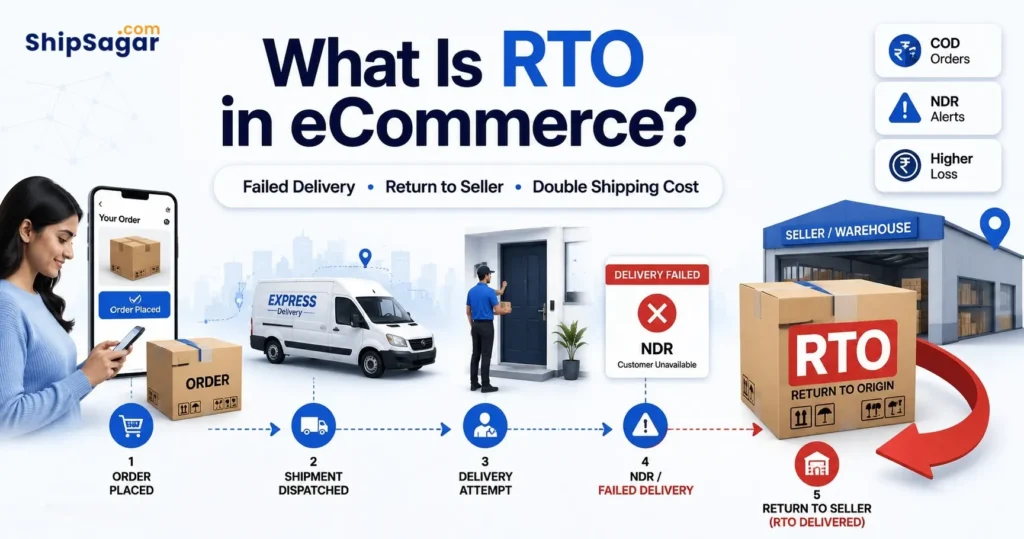
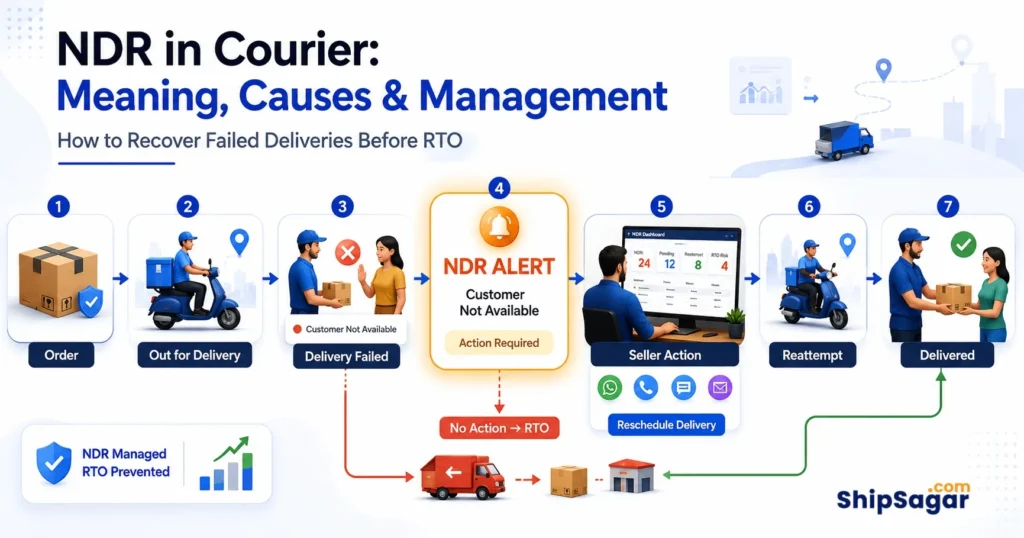
| After failed delivery attempt (NDR) | Buyer was home but no courier came (or came and left without calling). Buyer assumes cancelled. | NDR WhatsApp within 2 hours with rescheduling link |
WISMO vs Post-Purchase Experience – The Bigger Picture
WISMO is not just a support cost – it is a symptom of a broken post-purchase experience. The post-purchase window – the period between order confirmation and delivery – is one of the highest-anxiety, highest-attention moments in a buyer’s eCommerce journey. Brands that communicate proactively during this window build loyalty. Brands that go silent create anxiety – and WISMO. Research across eCommerce customer experience consistently shows: buyers who receive proactive delivery updates have higher Net Promoter Scores (NPS), higher repeat purchase rates, and leave fewer negative reviews – regardless of whether the delivery was fast or slow. Customers are remarkably forgiving of delays when they are communicated proactively. They are far less forgiving of silence.
| Brand With High WISMO (Reactive) | Brand With Low WISMO (Proactive) |
| Customer contacts support → agent manually checks 3 courier portals → delays 4 hours → frustrated reply | Customer receives WhatsApp at each milestone → never needs to contact support → delighted |
| Support team spends 40% of time on WISMO → cannot handle real issues → response time suffers | Support team free to handle returns, product issues, and high-value customer relationships |
| Negative reviews mention ‘no update’, ‘bad communication’, ‘didn’t know where order was’ | Positive reviews mention ‘great tracking’, ‘kept informed’, ‘smooth delivery experience’ |
| Annual WISMO support cost: ₹4,00,000–₹15,00,000+ for mid-size brands | ShipSagar cost: ₹2/shipment. 60–69% WISMO reduction. ROI: 5–8x. |
→ For how to improve post-purchase experience end to end: Order Tracking for eCommerce
→ Post-Purchase Experience: Why It Matters & How to Improve
8 Proven Strategies to Reduce WISMO for Indian eCommerce Brands
Here are the eight strategies that Indian D2C brands use to systematically reduce WISMO queries – ranked from highest to lowest impact:
Strategy 1 – Automate WhatsApp Notifications at Every Milestone (Highest Impact)
The single highest-ROI WISMO reduction strategy. Set up automated WhatsApp notifications at every key delivery milestone – Dispatched, In Transit, Out for Delivery, Delivered, and Failed Attempt. For Indian customers, WhatsApp has 5x higher open rates than email. A buyer who receives a WhatsApp update at each milestone has no reason to ask ‘Where is my order?’
| Key Notification Milestones to Automate: ✅ ‘Dispatched’ – Send within 30 minutes of courier pickup with tracking link ✅ ‘In Transit’ – Send when parcel reaches destination city hub ✅ ‘Out for Delivery’ – Send at 8–9 AM on delivery day with estimated window ✅ ‘Delivered’ – Send with delivery confirmation and thank you message ✅ ‘Failed Attempt’ – Send within 1 hour with rescheduling option ✅ ‘Delay Alert’ – Send proactively when delivery will be late |
Strategy 2 – Create a Branded Tracking Page on Your Domain
When customers click your tracking link and land on a Delhivery or Blue Dart page, they have left your brand – and they see a confusing courier-specific interface with status codes they do not understand. A branded tracking page – hosted on your domain, with your logo, your colors, and human-friendly status language – keeps customers in your ecosystem and reduces confusion-driven WISMO queries. Impact: Brands using ShipSagar’s branded tracking page report 40–60% reduction in tracking-confusion WISMO queries.
Strategy 3 – Set Accurate Expected Delivery Dates (and Communicate Delays)
One of the most common WISMO triggers is missed delivery date promises. If your checkout page says ‘Delivered in 3–4 days’ and the parcel arrives in 6, the customer contacts support on Day 5. Two fixes: (1) Use conservative, achievable delivery estimates – not optimistic ones. (2) When a delay is detected, send a proactive WhatsApp notification before the customer notices.
Strategy 4 – Normalize Tracking Status Language
Indian couriers use different language for identical events. ‘Bagged for Dispatch’ (India Post), ‘Manifested’ (older courier term), ‘With Delivery Courier’ (Blue Dart) – these mean ‘your order is on its way’ but customers read them as errors or confusion. Translate all courier statuses into plain, human-friendly language on your branded tracking page. ‘Your parcel is at the Mumbai sorting center – expected tomorrow’ eliminates a dozen WISMO queries.
Strategy 5 – Build Self-Service Order Tracking Into Your Website
Give customers the ability to track their order directly on your website – with just their order ID or phone number, no tracking number needed. Self-service tracking eliminates the need to contact support at all. Customers who find their answer themselves are more satisfied than those who had to ask. ShipSagar’s branded tracking page enables exactly this – customers track on your domain without any courier portal redirect.
Strategy 6 – Monitor and Alert on ‘Tracking Stuck’ Shipments
When a parcel has not updated for 48+ hours, it does not mean it is lost – it is usually in transit between hubs. But silence for 48 hours is the primary WISMO trigger for Indian buyers. Set up exception alerts in your tracking platform to flag shipments that have not updated within your defined window – and proactively message those buyers that ‘your order is on its way, courier update will follow soon.’
Strategy 7 – Reduce Multi-Courier Tracking Friction for Support Teams
Even with great customer-facing notifications, some WISMO queries will always reach support. Your support team should be able to find any shipment’s status in under 30 seconds – without switching between 5 courier portals. A unified multi-courier tracking dashboard means your support agent can answer ‘Your order is out for delivery in Mumbai – expected by 4 PM today’ in one lookup, not five.
Strategy 8 – Use Carrier Analytics to Fix High-WISMO Couriers
Some couriers generate disproportionately more WISMO queries – because their tracking updates are slow, their delivery windows are inconsistent, or their India Post coverage generates frequent ‘tracking not updating’ queries. Use carrier analytics data – per-courier tracking update frequency and NDR rate – to identify which couriers cause the most WISMO and either replace them or add extra proactive notifications for shipments on those carriers. → For detailed WISMO reduction strategies using parcel tracking software: How to Reduce WISMO Calls with Parcel Tracking Software
How ShipSagar Eliminates WISMO at Scale – For Indian eCommerce Brands
ShipSagar is India’s unified shipment tracking platform – built to eliminate WISMO at every stage of the delivery journey across 500+ Indian and global courier partners:
| WISMO Root Cause | ShipSagar Solution |
| No dispatch notification | Automated ‘Dispatched’ WhatsApp* + Email the moment the courier picks up – across all 500+ carriers. |
| No OFD notification | Automatic Out-for-Delivery WhatsApp* at the OFD milestone – buyers know to be home before the courier arrives. |
| Tracking redirect to courier portal | Branded tracking page on your domain – customers track on your website, see human-friendly statuses, stay in your brand ecosystem. |
| Tracking not updating (stuck shipment) | Exception alerts for shipments with no update for your defined window – proactively identify and notify before customers ask. |
| Support team checking 5 portals per query | Single unified dashboard – find any shipment status across all couriers in under 30 seconds. One login, one search. |
| High WISMO from specific courier | Carrier analytics – identify high-WISMO couriers by tracking update frequency and NDR rate. Replace or add extra notifications. |
| ShipSagar WISMO Impact: HYPD – a fast-growing Indian lifestyle brand – reduced WISMO support queries by over 60% within the first month of using ShipSagar’s automated WhatsApp notifications and branded tracking page. Their support team, previously spending 40% of daily time on ‘Where is my order?’ queries, was able to refocus on returns management, product quality issues, and customer relationship initiatives. |
| Start Free on ShipSagar: Track all shipments across 500+ couriers, send automated WhatsApp* (add-on extra cost) + SMS + Email at every milestone, and create a branded tracking page on your domain – starting free. Free Plan: 50 shipments, lifetime free, no credit card. Growth Plan: ₹2/shipment – all features including WhatsApp* notifications and branded tracking page. |
→ Branded tracking page that eliminates redirect WISMO: shipsagar.com/branded-tracking-page/ → Order tracking for eCommerce – full post-purchase experience: shipsagar.com/order-tracking-for-ecommerce/ → Courier tracking India – all couriers covered: shipsagar.com/courier-tracking-india/
Related Guides on ShipSagar
Essential Reading for eCommerce Logistics:
- How to Reduce WISMO Calls with Parcel Tracking Software
- What Is RTO in eCommerce? Complete Guide for Indian Sellers
- What Is NDR in Courier? Meaning, Causes & How to Manage
- Courier Tracking India: Complete Guide
- Parcel Delivery Tracking: Complete Guide for Indian eCommerce Brands